
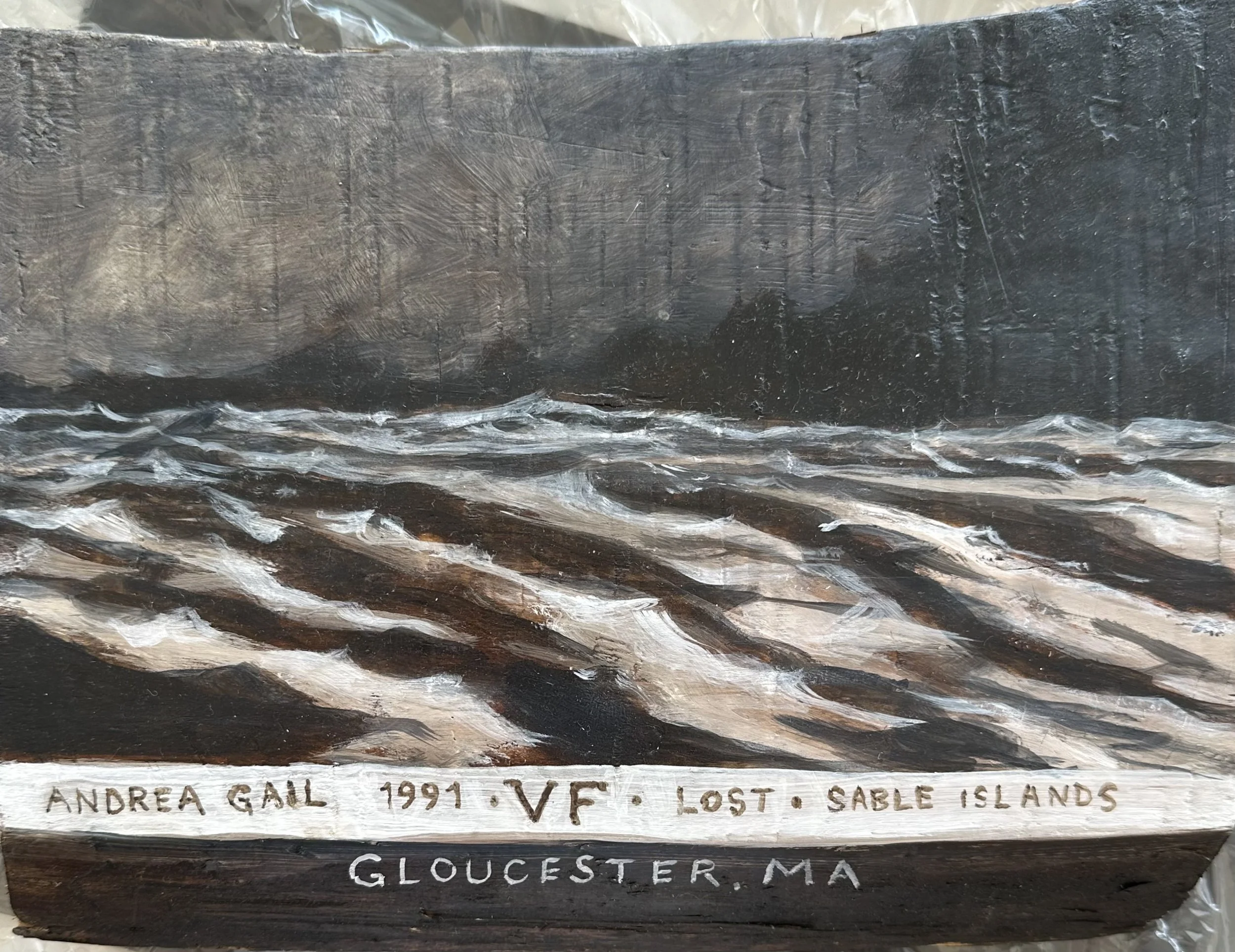
WILLIAM PETTIT | LOST
January 2027
Opening Reception | tbd
William Pettit’s recent work involves research and reproduction of historic maritime paintings. While studying Italian votive paintings, or PGR’s, he heard about the loss of the LILY JEAN fishing vessel of Gloucester, and moved by the story, made a series of paintings about the Lily Jean in the style of Italian votive paintings.
Traditional PGR’s (meaning “For Grace Received”) were paintings made as thanks for prayers answered, for sailors saved from shipwrecks. For the Lily Jean, there was no salvation, so these paintings are memorials of loss rather than celebrations of recovery.
A series of LOST paintings grew to represent the many Gloucester vessels lost at sea, from the Lily Jean to the Andrea Gail, and the many fishing vessels lost off Cape Ann in the 20th century, connecting recent losses with an historic tradition of remembering.
The paintings are on recuperated hardwoods, recalling both the tradition of votive paintings and as symbolic relics of the ships lost.
The first series of Lily Jean paintings were donated to the Lily Jean Fund in May. These new paintings, too, are made as objects of memory; and sales proceeds will be donated to the Lily Jean Fund with the hope of giving something back to the community that has given so much.
William Albert Pettit III is a Professor of Studio Art at Temple University Rome and at Iowa State Rome Program, Italy. He specializes in historical materials and techniques related to Italian art. He currently teaches Fresco Painting, Medieval Materials, and Darkroom Photography. He is a painter and published poet and works with photography, sculpture, music, video, and installation. His recent shows at NBWM and at The Vincent House, MVY, are about working with museum collections and records to revalorize and reinhabit stories of our past. Pettit has exhibited extensively in the United States and Italy. He is the 2024-2025 recipient of the Dean’s Research Grant and 2019 recipient of the OVPR Arts and Humanities Grant from Temple University Rome. His research on pigments has been supported by residences and shared at conferences. The artist lives in Tarano, Italy, where he maintains a small vineyard, olive grove, and garden.
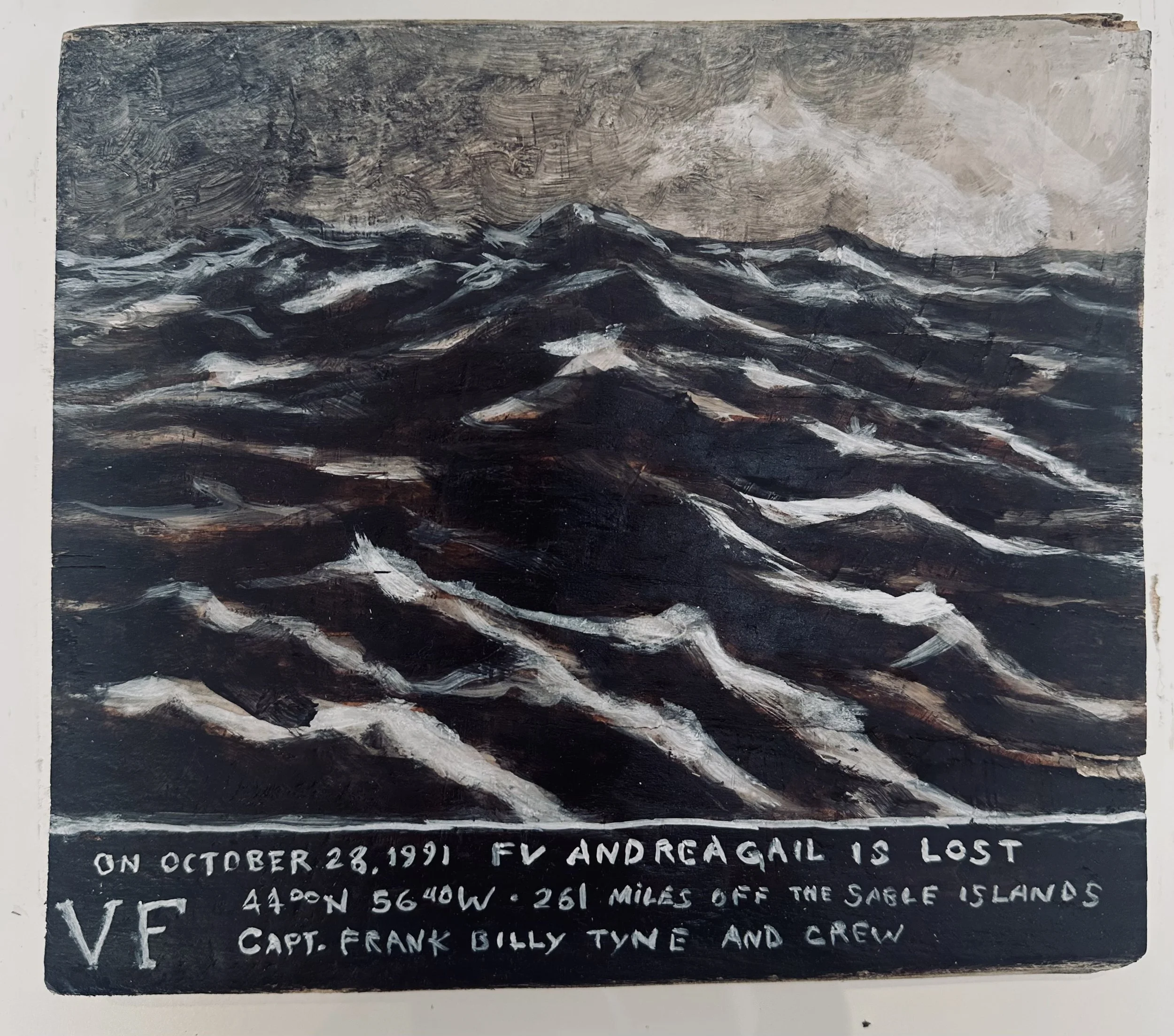
Andrea Gail #1 . Lost Sable Islands 1991 . Oil on wood
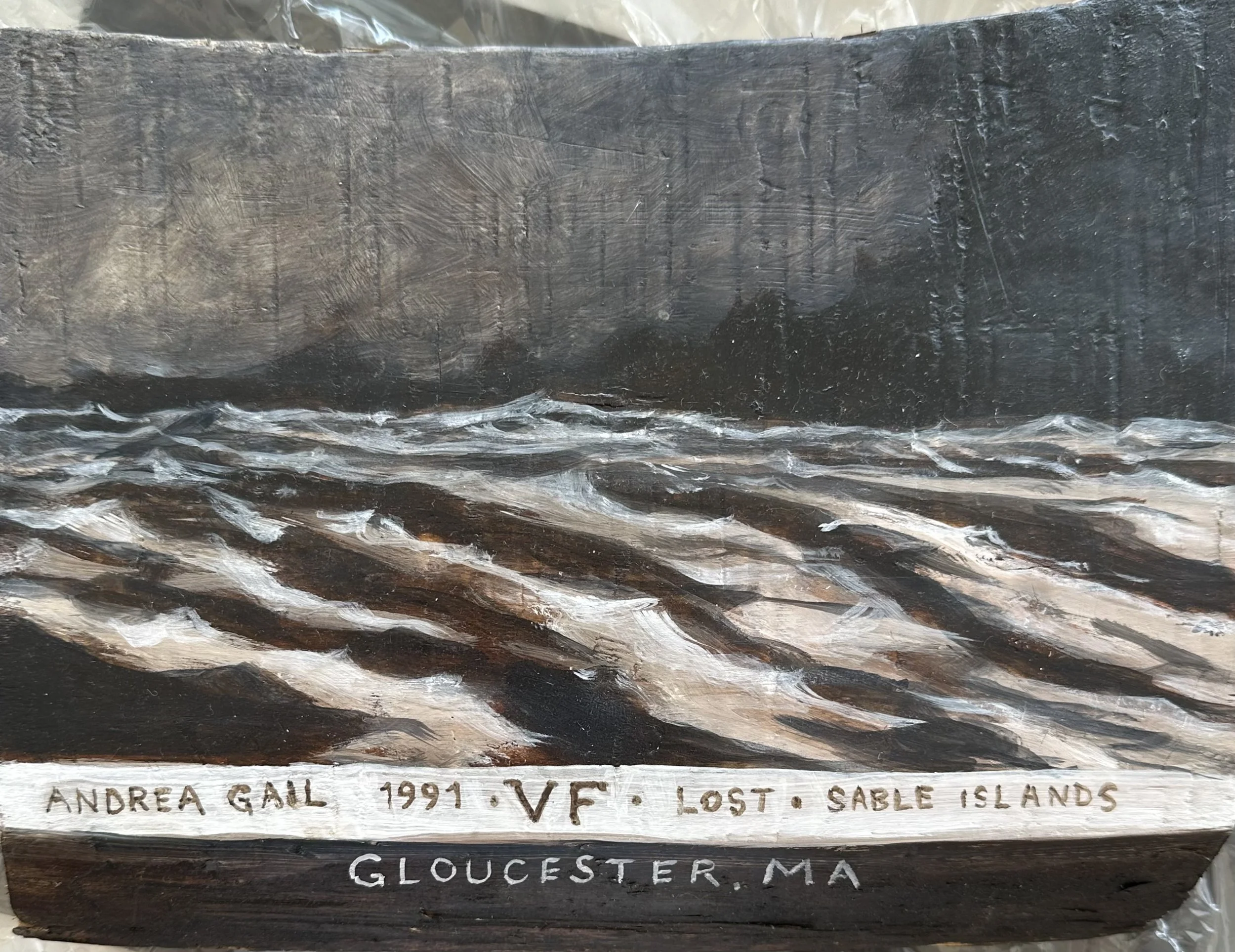
Andrea Gail #2 . Lost 1991 Sable Islands . Oil on wood
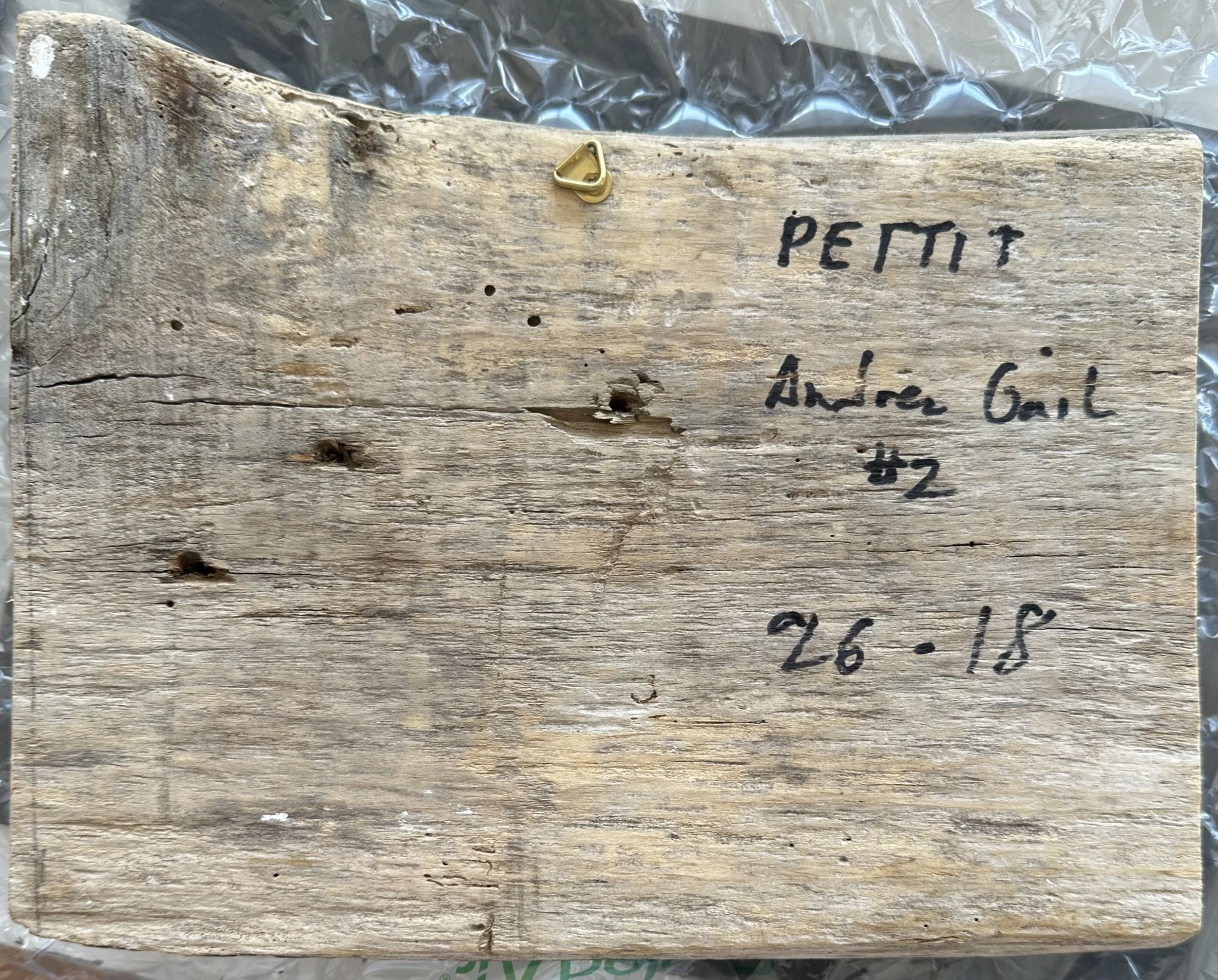
Andrea Gail #2 . Lost 1991 Sable Islands . Oil on wood . reverse side
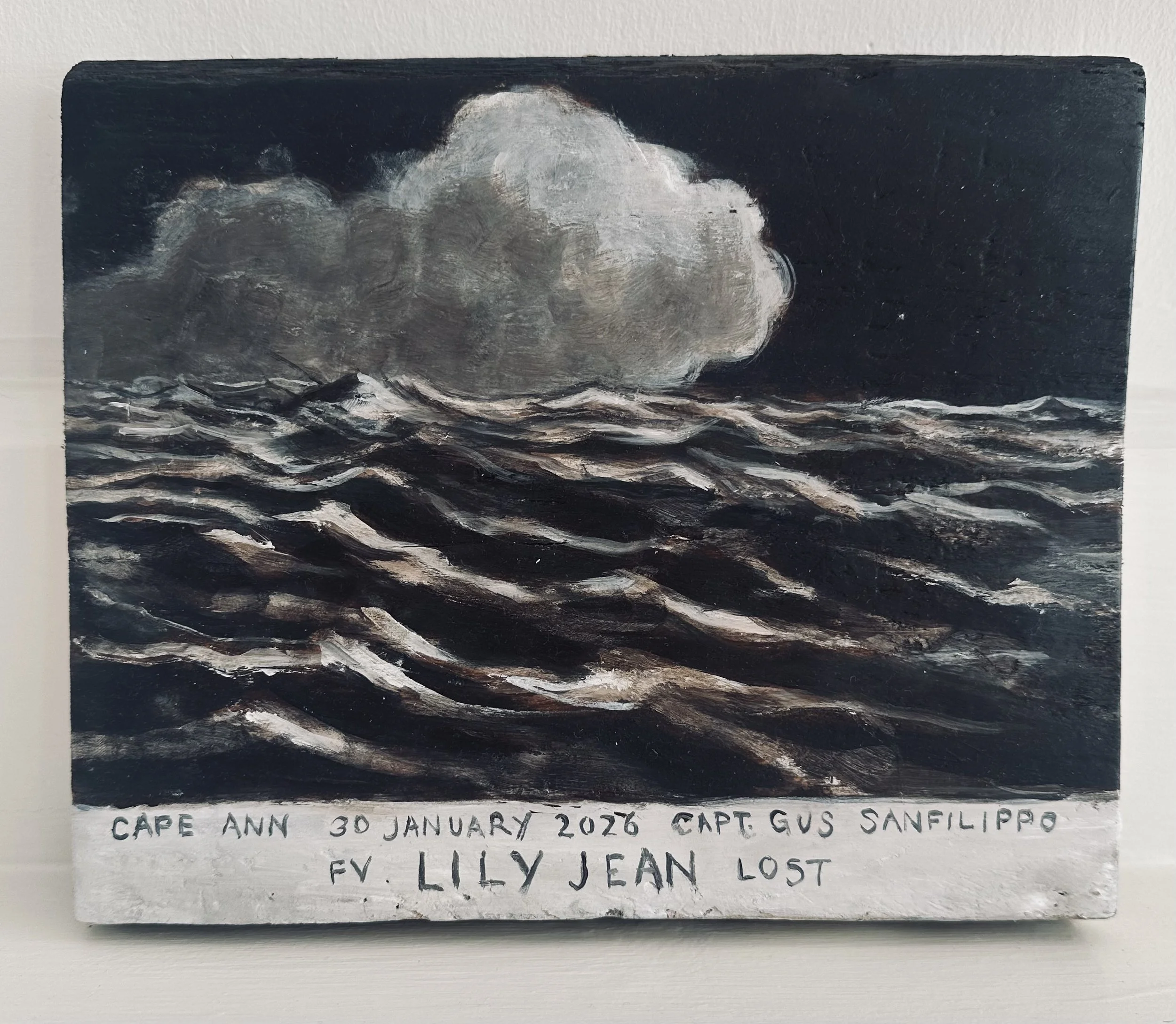
Lily Jean . Lost 30 January 2026 . Oil on wood
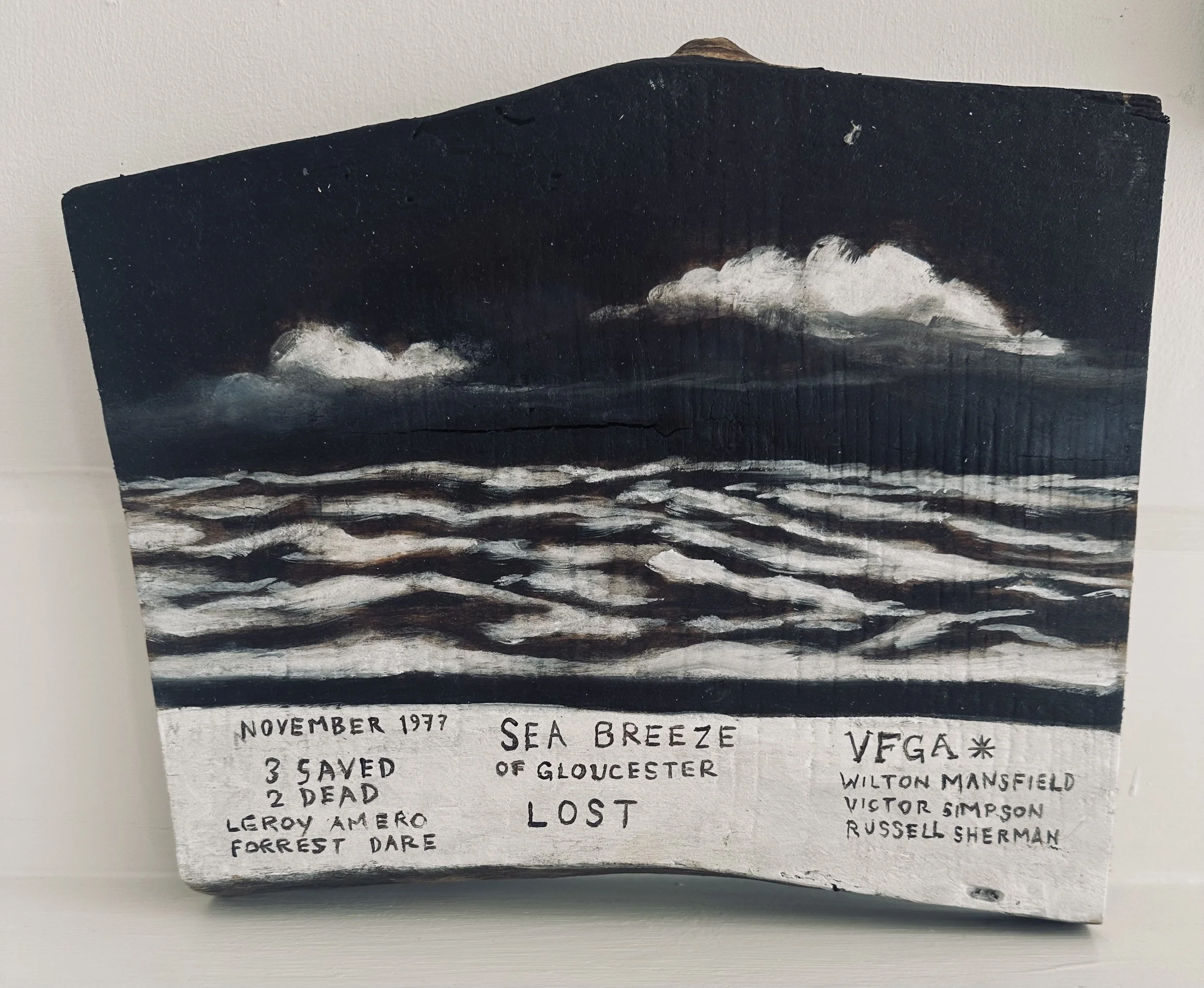
Sea Breeze of Gloucester . Lost November 1977 . Oil on wood
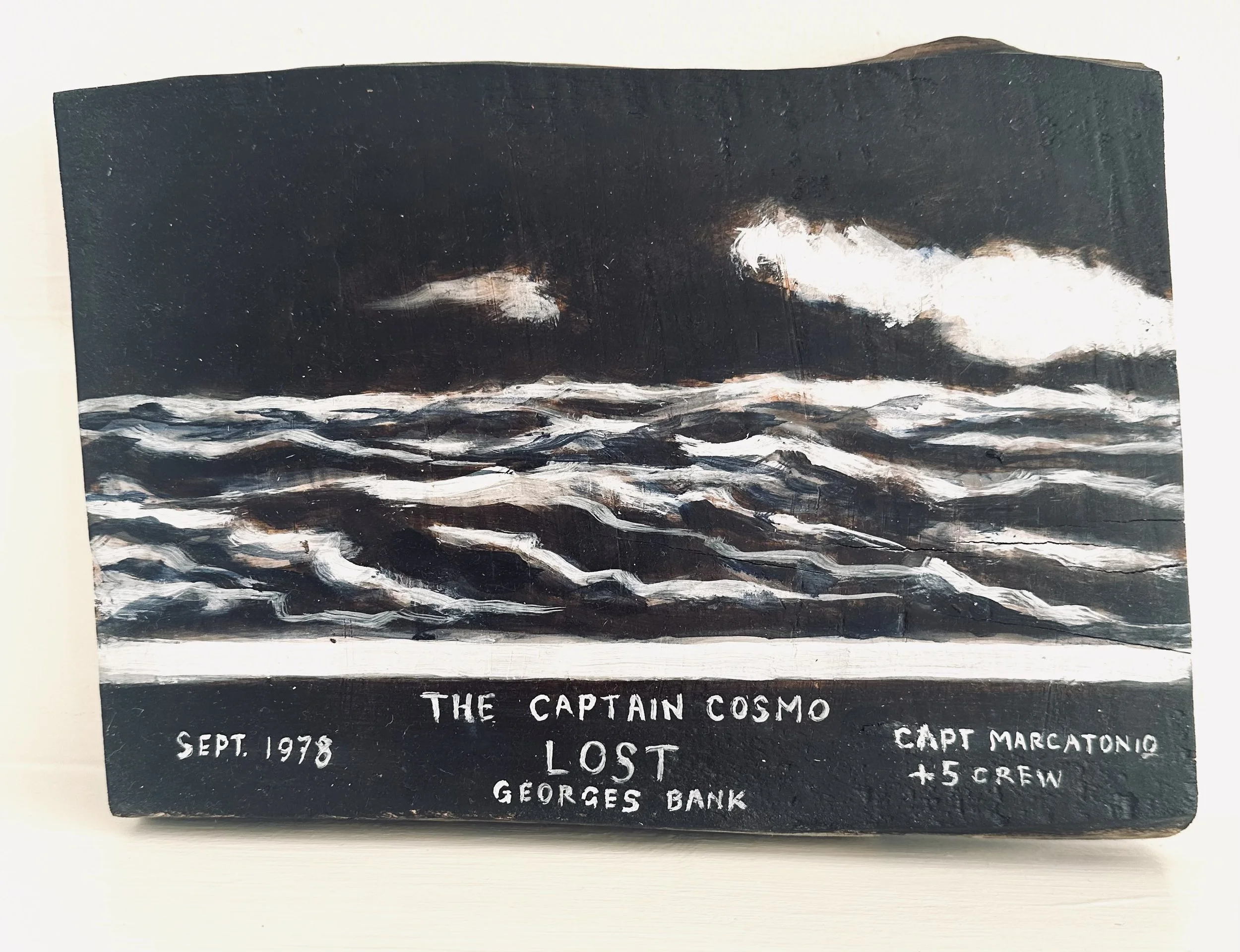
The Captain Cosmo . Lost George's Bank . Sept 1978 . Oil on wood
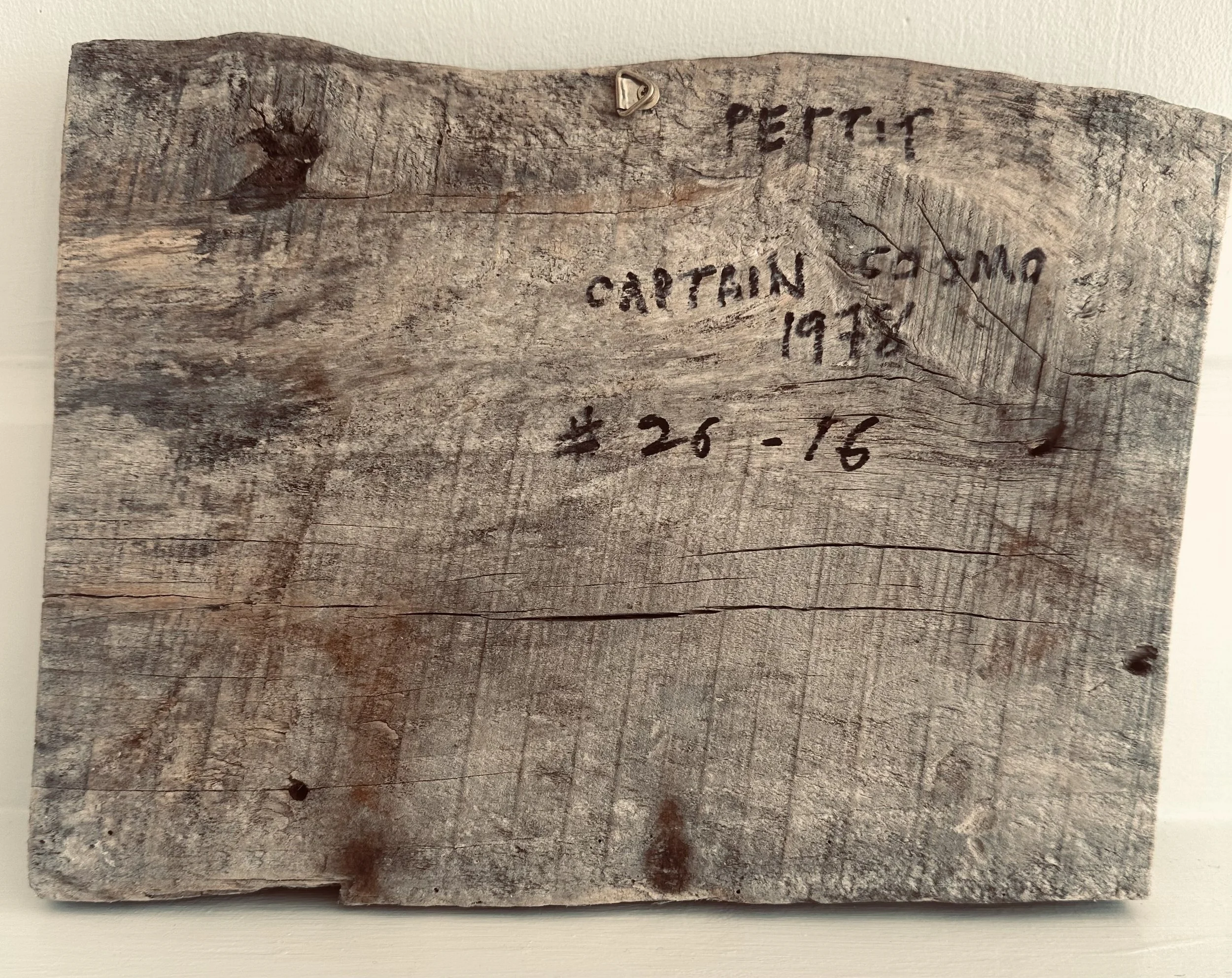
The Captain Cosmo . reverse side
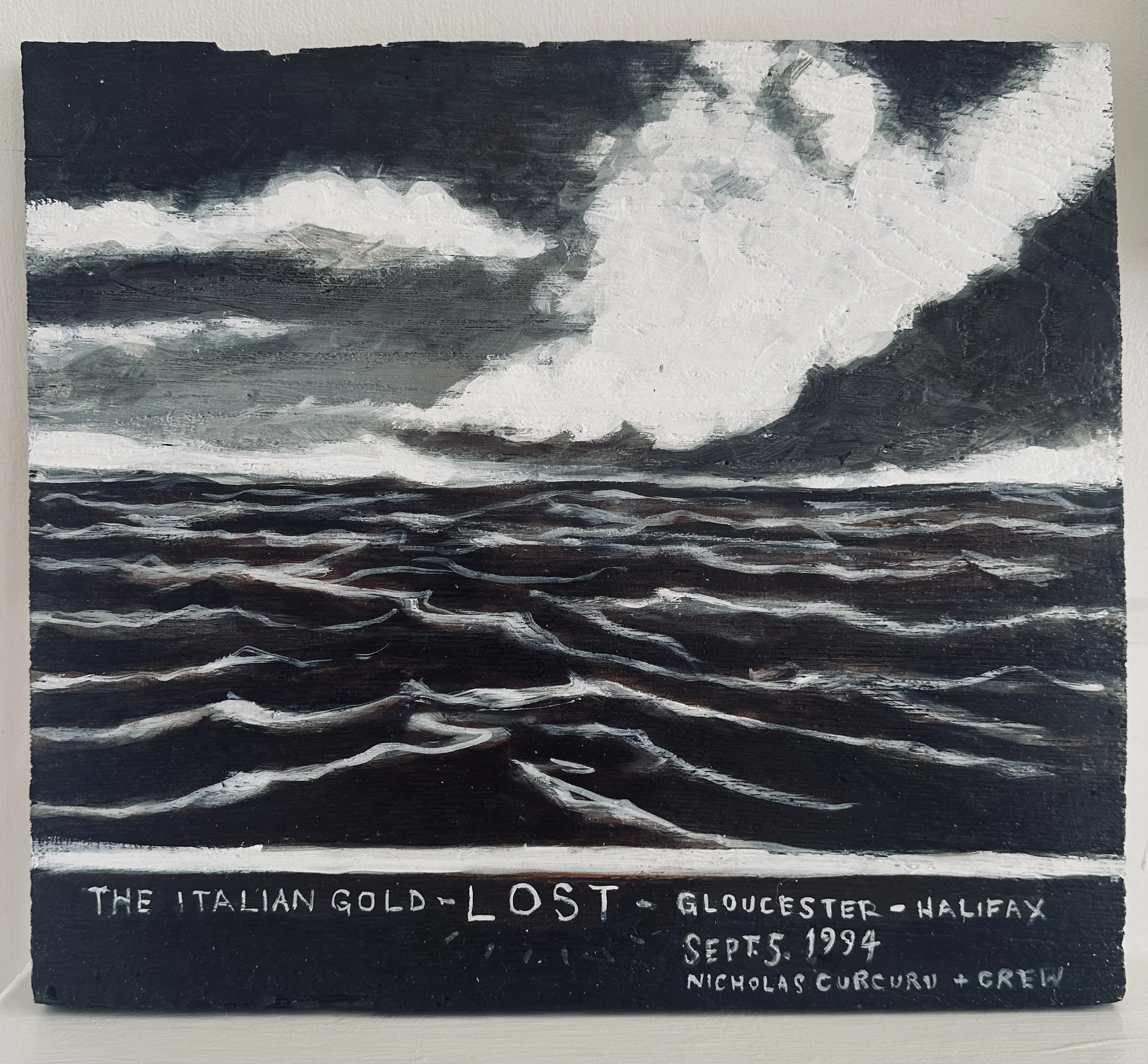
The Italian Gold . Lost Sept 5 1994 . Oil on wood
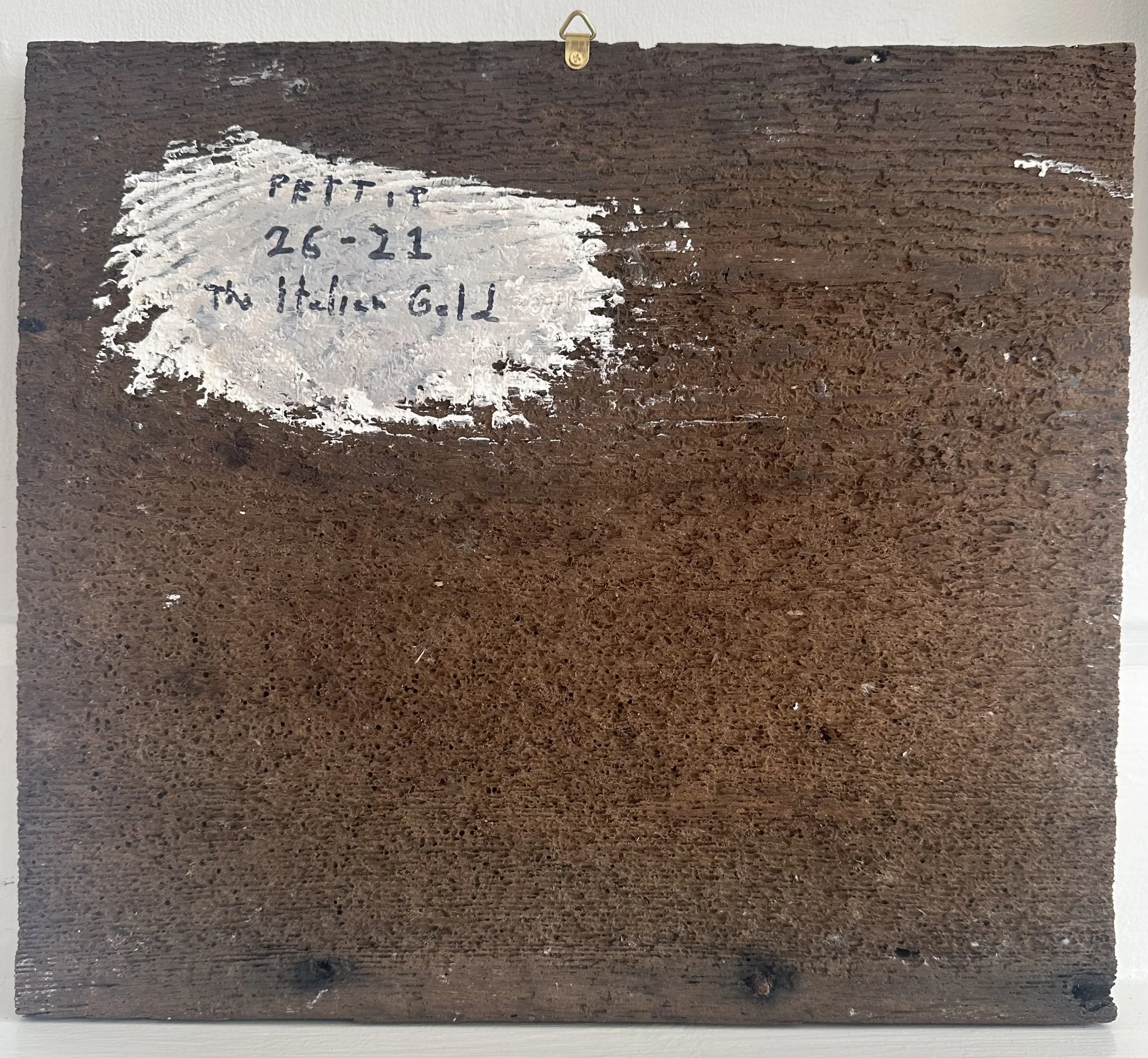
The Italian Gold . reverse side